

Natural Solutions for Bulging Disc Pain Without Surgery or Injections
A disc bulge is one of the most common spinal conditions affecting adults, especially those who experience chronic lower back pain or nerve-related symptoms. When a spinal disc begins to weaken and push outward beyond its normal boundary, it can place pressure on surrounding tissues and nerves.
For many patients, a bulging disc develops gradually over time due to repetitive stress on the spine, poor posture, or natural aging of the spinal discs. While some disc bulges cause little to no symptoms, others can lead to persistent back pain, stiffness, and nerve irritation that can become worse over time.
At Strive Integrative Health in Brookfield, Wisconsin, we specialize in identifying the underlying causes of spinal disc problems and providing non-surgical treatment options designed to relieve pressure on spinal discs and restore proper spinal function.
Many patients visit our clinic after trying medications, injections, or physical therapy without lasting results. Our approach focuses on improving spinal mechanics, reducing disc pressure, and helping the body heal naturally. By addressing the root cause of disc injuries, we help patients regain mobility, reduce pain, and get patients back to living life on their own terms.
What Is a Disc Bulge?
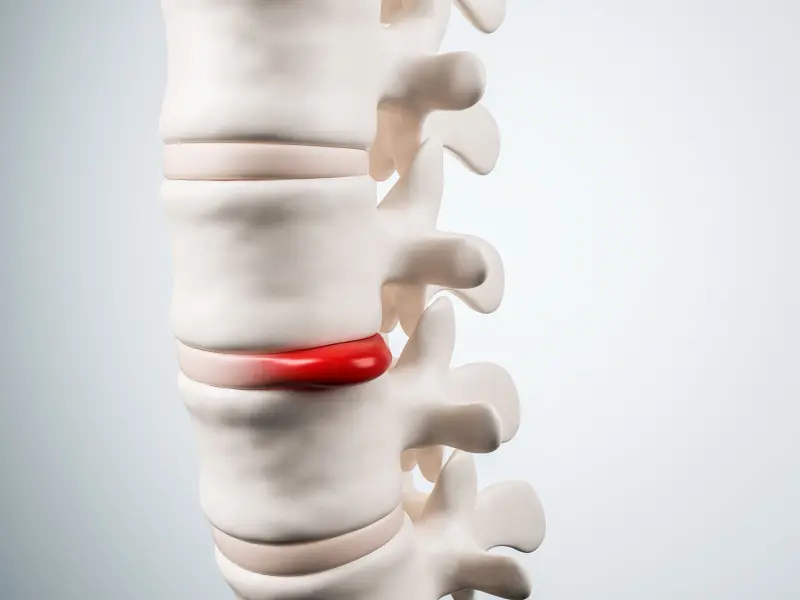
A disc bulge occurs when a spinal disc extends outward beyond its normal boundary between the vertebrae. Unlike a herniated disc, the outer layer of the disc remains intact.
Spinal discs sit between each vertebra and act as shock absorbers for the spine. They allow the spine to bend, twist, and move smoothly while absorbing forces generated during daily activities.
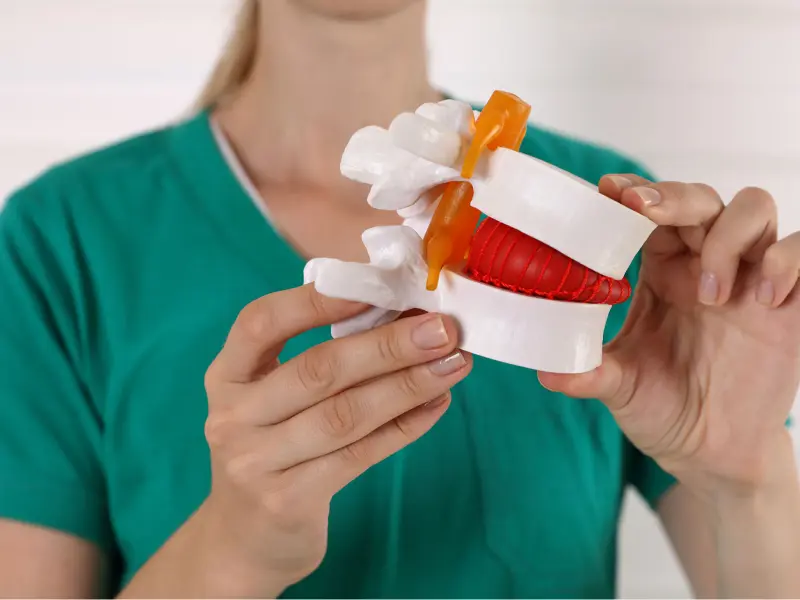
Each disc contains two primary components: the Nucleus Pulposus, which is the soft, gel-like center of the disc that helps absorb shock and distribute pressure. The Annulus Fibrosus, which is the strong outer ring of the disc that holds the inner nucleus in place.
When a disc begins to weaken, the outer annulus may start to bulge outward into the space nerves travel. This bulging can lead to pain or nerve irritation, but many adults have bulging discs without experiencing symptoms.
Common Symptoms of a Bulging Disc
Symptoms of a disc bulge depend on the location, severity, and whether nerves are affected. Common symptoms may include:
- Back pain
- Stiffness in the spine
- Pain that worsens when sitting
- Pain when bending or lifting
- Muscle tightness or spasms
- Pain that radiates into the upper or lower extremities
- Numbness or tingling in the upper or lower extremities
- Weakness in the upper or lower extremities
Symptoms are very dependent on the location and severity of the disc bulge. As previously stated, many adults live with a disc bulge and no symptoms. For those who have symptoms from a disc bulge, we know it is putting pressure on nearby nerves. For example, if a disc is putting pressure on the sciatic nerve, this patient typically experiences sciatica that travels down the leg.
$49 New Patient Special
Includes Consultation, Orthopedic exam, Motion studies, Risk-fall and assessment, Full Spine Xrays, Full Report of Findings, & Spinal relief treatment. $895 Value.
How Our Care Plan Works
1. Jumpstart Your Relief
You’re in pain and looking for answers. That’s why this first visit is all about understanding you—not just your symptoms. We’ll take a deep dive into your health history, do a full spinal exam, take any necessary x-rays, and give you a gentle trial treatment to get your body moving in the right direction. You’ll walk out with more than just hope—you’ll walk out with answers.
2. Finally Find Your Solution
At your second visit, we’ll show you exactly what’s going on and why you haven’t gotten lasting relief in the past. You’ll see your x-rays and receive a personalized, step-by-step care plan that targets the root of your problem. You’ll also receive your second treatment to start building momentum. This is the moment most people say, “Finally—someone gets it.”
3. Freedom To Do Everything You Want
This is where real change happens. Over the next few months, we’ll walk with you through a customized care plan designed to restore your body’s natural healing abilities, reduce pain, and help you return to what you love—whether that’s golfing, hiking, chasing your grandkids, or just living without constant discomfort. It’s not a quick fix. It’s a real plan for freedom.
Where Disc Bulges Most Commonly Occur
Disc bulges can occur in several areas of the spine, but they most often develop in regions that experience the greatest mechanical stress.
Lumbar Disc Bulges
The most common location for disc bulges is the lumbar spine, or lower back. These discs support much of the body’s weight and absorb forces generated during lifting, bending, and twisting. Lumbar disc bulges frequently occur between the L4-L5 or L5-S1 vertebrae.
Symptoms of lumbar disc bulges may include lower back pain, sciatica, and leg numbness or tingling.
Cervical Disc Bulges
Disc bulges can also occur in the cervical spine, or neck region. These discs are most commonly impacted by forward head posture sustained from prolonged computer use or prolonged driving. Cervical disc bulges frequently occur between the C4-C5, C5-C6, or C6-C7 vertebrae.
Cervical disc bulges may cause neck pain, shoulder pain, arm pain, numbness in the fingers, or weakness in the arms. These symptoms occur when bulging discs irritate nerves that travel from the neck into the arms.
What Causes Disc Bulges
The most common causes of a disc bulge are natural aging, sudden injury, or repeated stress on the spine that develops gradually over time. Several factors may contribute to disc bulging, including:
Disc Degeneration
As spinal discs age, they lose hydration and elasticity. This process, known as degenerative disc disease, weakens the disc structure and increases the probability of a disc bulging.
Repetitive Movements
Repeated bending, lifting, and twisting can gradually weaken the annulus fibrosus, the outer layer of the disc. These activities typically consist of work or recreational activities that a patient may perform for years or even decades. Over time, this may cause the disc to push outward due to stress and weakening of the outer layer.
Poor Posture
Sitting for long periods with poor posture places additional pressure on spinal discs. Patients who experience this most commonly have desk jobs or drive for prolonged periods for work.
Lifting Injuries
Improper lifting techniques can place excessive pressure on the spine. Lifting heavy objects while bending forward may increase the risk of disc injury.
Trauma or Accidents
Car accidents, falls, and sports injuries can damage spinal discs and lead to disc bulges. Even relatively minor injuries may contribute to disc damage if the spine is already under stress.
Disc Bulge vs Herniated Disc
Many patients are unsure of the difference between a bulging disc and a herniated disc. While both conditions involve spinal discs, they are slightly different. A bulging disc occurs when the disc pushes outward but the outer layer, the annulus fibrosus, remains intact. A herniated disc occurs when the outer disc layer tears and the inner disc material, the nucleus pulposus, pushes through. Although bulging discs may cause fewer symptoms, they can still compress nerves and lead to significant pain.
How Disc Bulges Affect Spinal Nerves
The brain is the control center and runs down through the spinal cord. The spinal cord is protected by the vertebrae like a suit of armor. The spinal nerves exit the spine through small openings between the vertebrae known as the foramina. When a disc bulges, it can narrow these spaces and compress nearby nerves.
Nerve compression may cause symptoms such as radiating leg pain, numbness, tingling, muscle weakness, and burning sensations. This type of compression can even lead to sciatica, which causes pain traveling down the leg.
How We Diagnose Disc Bulges at Strive Integrative Health in Brookfield, WI
At Strive Integrative Health in Brookfield, the first step is to sit down with you to understand what is causing your low back pain, how severe it is, and whether we can help. From that initial consultation, we typically have a good idea of your specific condition and what needs to be done, but we don’t like to guess with your health — we like to test. After the consultation, we always do a comprehensive exam and any necessary X-rays to determine exactly where your problem is.
This comprehensive consultation and examination allows us to determine the root cause of your low back pain and construct a treatment plan that not only gets you feeling better now, but also keeps you feeling better long-term.
Your evaluation may include:
- Detailed health history
- Postural assessment
- Range of motion testing
- Orthopedic and neurological testing
- Digital X-rays with motion analysis
- MRI for confirmation
These assessments are great ways to determine whether your pain is caused by disc issues, joint dysfunction, nerve irritation, muscle imbalances, or a combination of these.
At Strive Integrative Health, we understand that everyone is different, so once we uncover the underlying cause, we create a personalized treatment plan to help you get the results you are looking for and get back to living life on your terms.


Our Non-Surgical Treatment Approach for a Disc Bulge in Brookfield, WI
At Strive Integrative Health, we focus on natural treatments that don’t require pain pills, surgeries, or injections. Instead, we use state-of-the-art equipment and techniques that promote healing and restore spinal function.
Many of our patients deal with similar symptoms, but everyone is slightly different and may require different therapies to achieve their health goals. That’s why at Strive Integrative Health we offer several different treatments to help with low back pain, and based on the doctor’s evaluation, we will always go over your best course of care to achieve optimal results.
Some of those treatments may include:
Specific Chiropractic Care in Brookfield, WI
Chiropractic adjustments help restore proper motion to the spine. Through our motion study analysis on X-rays, we can determine exactly which joints are not moving properly and where they are putting pressure on the nervous system. When these joints in the spine become restricted or misaligned, it creates irritation in the nerve, disc, and surrounding soft tissue, leading to pain and restricted range of motion.
Left untreated, this area can continue to get worse. Dr. Jonathan Stevenson likes to say, “motion is lotion, and rest is rust.” This means a spine that does not move will degenerate faster than a spine that maintains a healthy range of motion. Chiropractic care is essential for an optimal functioning spine and nervous system.
A well-adjusted spine helps improve spinal mobility, reduce nerve irritation, improve overall posture, and restore proper movement patterns. This approach allows the body to function more efficiently and heal naturally without the use of pain pills, surgeries, or injections.
Spinal Decompression Therapy
Spinal decompression is a great non-surgical treatment option designed to reduce pressure on spinal discs, decrease tightness, and alleviate nerve irritation.
We use a specialized decompression table that delivers gentle traction to the lumbar spine to help create space between vertebrae. This may help reduce disc pressure, improve disc hydration, relieve nerve compression, and promote disc healing.
In our office, spinal decompression is often used for conditions such as herniated discs, disc bulges, and degenerative disc disease.
Shockwave Therapy (PiezoWave / Myo-Acoustic Therapy)
PiezoWave treatment has been an absolute game changer for many of our patients. It is one of the premier focused shockwave therapy devices used in our office to stimulate healing in injured tissue. It’s classified as a myo-acoustic therapy that sends out sound waves to help improve blood flow and cellular repair, which can accelerate recovery from chronic inflammation and soft tissue injuries.
PiezoWave technology is often used in our office for low back pain, degenerative disc disease, sacroiliac joint dysfunction, and much more.
Red Light Therapy
Red light therapy is sometimes used in our office to help stimulate cellular repair, reduce inflammation, and reduce pain. We use different wavelengths with the Prism Light Bed to provide the best outcomes for our patients. It is a high-power light bed that delivers a strong, effective dose of healthy red light to accelerate recovery.
This therapy supports mitochondrial function; mitochondria make up approximately 10% of an adult’s body weight and act as the power plants of the body, producing ATP for energy. Stimulating these cells allows them to produce more energy and recover more effectively. Many patients experience improved healing and reduced pain when red light therapy is incorporated into their treatment plan.
Why Patients Choose Strive Integrative Health in Brookfield, WI
Patients throughout Southeastern Wisconsin and beyond choose Strive Integrative Health. The majority of our patients reside in Brookfield, Waukesha County, and the Greater Milwaukee area because we focus on long-term solutions rather than temporary symptom relief.
Our approach is centered around understanding why the patient is in pain and what areas of their life are impacted. Once we determine that we can help, we utilize a treatment that addresses the root cause of their pain using non-surgical treatments like chiropractic adjustments, spinal decompression, PiezoWave therapy, and red light technology. Every patient receives a personalized care plan centered around patient education and long-term spinal health.
At Strive Integrative Health, we believe the power that made the body heals the body, and when your spine functions properly, the body has an incredible ability to heal and recover. Sometimes the body just needs a nudge in the right direction, and that is exactly what we are here to help it accomplish.
Tips to Help Prevent a Disc Bulge and Low Back Pain
We often think big traumas cause low back pain, like motor vehicle accidents or sports injuries. What we see most commonly, though, is daily repetitive micro-traumas that cause the majority of the low back pain we see in our office — things like how we bend, sit, lift, twist, and hold our posture every single day, which can start as occasional low back pain and gradually become chronic if not addressed properly.
While treatment in our office can help restore spinal health, there are also steps you can take to reduce your risk of developing chronic back pain, like maintaining good posture when sitting and standing, staying physically active, strengthening your core and glute muscles, avoiding prolonged sitting, using proper lifting techniques, and stretching regularly.
When Should You Seek Treatment for a Disc Bulge
If you are experiencing any of the symptoms listed below, it may be time to schedule an appointment at Strive Integrative Health to see if we can help:
- Back pain lasting longer than two weeks
- Pain that radiates into the leg
- Numbness or tingling in the legs
- Weakness in the legs or feet
- Difficulty walking or standing
Always remember, early evaluation and treatment can help prevent minor issues from progressing into more serious conditions.
Check Out Our Location Near You
19555 W Bluemound Rd Suite 14, Brookfield, WI 53045
Frequently Asked Questions About Disc Bulges
Can a bulging disc heal on its own?
Many bulging discs improve with conservative treatment and proper spinal care.
Is a bulging disc serious?
Some bulging discs cause minimal symptoms, while others may compress nerves and lead to significant pain.
Can chiropractic care help a bulging disc?
Chiropractic care focuses on improving spinal movement and reducing pressure on discs, which may help relieve symptoms.
Can spinal decompression help disc bulges?
Spinal decompression is commonly used to reduce pressure on spinal discs and relieve nerve compression.
What’s the difference between a bulging disc and a herniated disc?
A bulging disc occurs when the disc pushes outward but the outer layer, the annulus fibrosus, stays intact, while a herniated disc occurs when that outer layer tears and the inner disc material pushes through.
Schedule a Disc Bulge Consultation
If you are experiencing symptoms of a herniated disc, our team at Strive Integrative Health in Brookfield, Wisconsin is here to help.
Our goal is to relieve disc pressure, restore spinal health, and help you return to the activities you enjoy.
Contact our office today to schedule your consultation and begin your path toward lasting relief.
$49 New Patient Special
Includes Consultation, Orthopedic exam, Motion studies, Risk-fall and assessment, Full Spine Xrays, Full Report of Findings, & Spinal relief treatment. $895 Value.
