

Non-Surgical Solutions for Disc Injuries Without Surgery, Injections, or Pain Medication
A herniated disc is one of the most common causes of chronic back pain and nerve irritation. When a spinal disc becomes damaged and begins pressing on nearby nerves, it can create symptoms that range from mild discomfort to severe pain that interferes with everyday life.
Many people experience symptoms such as lower back pain, radiating leg pain, numbness, tingling, or muscle weakness. In more serious cases, a herniated disc may make it difficult to sit, stand, walk, or perform normal daily activities.
At Strive Integrative Health in Brookfield, Wisconsin, we specialize in identifying the underlying cause of disc injuries and providing non-surgical treatment solutions designed to relieve pressure on spinal discs and nerves.
Our approach focuses on restoring proper spinal function and helping the body heal naturally. By improving spinal mechanics and reducing stress on injured discs, many patients are able to recover without needing surgery or long-term medication.
Many people who visit our clinic have already tried physical therapy, pain medication, or injections with limited success. Our goal is to address the root cause of the disc injury so patients can achieve lasting relief and improved mobility.
What Is a Herniated Disc?
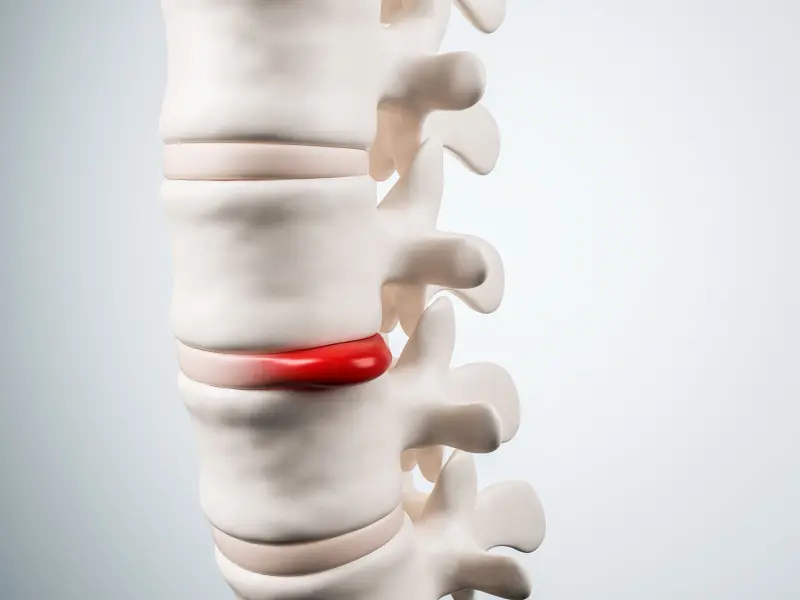
A herniated disc occurs when the soft inner portion of a spinal disc pushes through the outer layer of the disc. This can happen when the outer layer weakens or develops small tears.
Spinal discs sit between each vertebra in the spine and act as shock absorbers that allow the spine to move smoothly.
Each disc contains two main components:
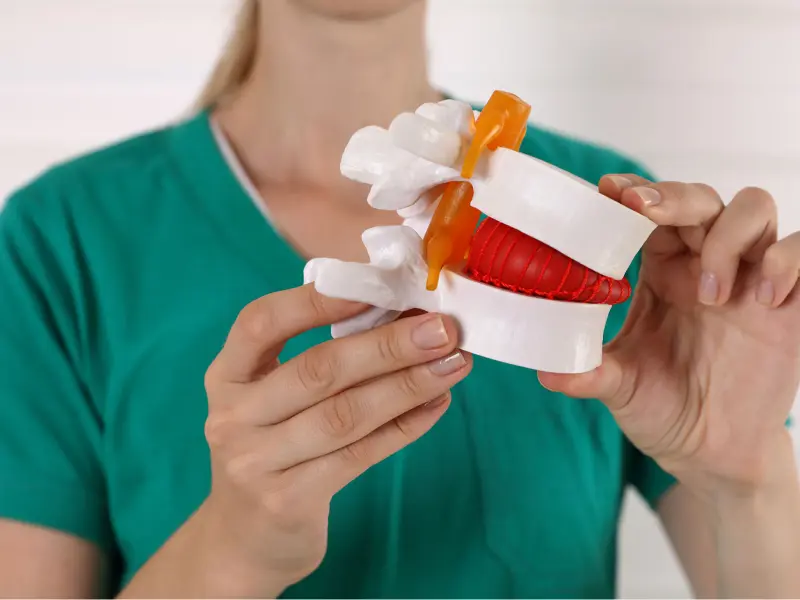
- Nucleus Pulposus: The soft, gel-like center of the disc that helps absorb pressure.
- Annulus Fibrosus: The strong outer layer that surrounds and protects the disc.
When the annulus fibrosus becomes damaged, the inner nucleus can push outward. This is called a disc herniation.
If the herniated disc presses on nearby nerves, it may cause symptoms such as pain, numbness, tingling, or muscle weakness.
Herniated discs most commonly occur in the lumbar spine (lower back) but can also occur in the cervical spine (neck).
Common Symptoms of a Herniated Disc
Symptoms of a herniated disc can vary depending on the location of the injury and whether nerves are involved.
Common symptoms include:
- Lower back pain
- Sharp or stabbing back pain
- Pain that radiates down the leg
- Numbness or tingling in the legs
- Muscle weakness
- Difficulty bending or lifting
- Pain that worsens when sitting
- Pain when coughing or sneezing
If the herniated disc compresses the sciatic nerve, patients may experience sciatica, which causes pain traveling from the lower back into the leg.
In some cases, patients may experience symptoms primarily in the leg rather than the back.
Where Herniated Discs Most Commonly Occur
Herniated discs can occur in several areas of the spine, but they most frequently develop in the following places:
- lumbar spine.
- Lumbar Disc Herniation
Lumbar herniated discs occur in the lower back and are the most common type of disc injury.
They often affect discs between the vertebrae:
- L4-L5
- L5-S1
These discs experience significant mechanical stress because they support much of the body’s weight.
Lumbar herniations often cause:
- lower back pain
- sciatica
- leg numbness
- leg weakness
Cervical Disc Herniation
Herniated discs can also occur in the neck.
Cervical disc herniations may cause:
- neck pain
- shoulder pain
- arm pain
- numbness in the fingers
- weakness in the arms
Although less common than lumbar herniations, cervical disc injuries can significantly impact daily activities.
$49 New Patient Special
Includes Consultation, Orthopedic exam, Motion studies, Risk-fall and assessment, Full Spine Xrays, Full Report of Findings, & Spinal relief treatment. $895 Value.
How Our Care Plan Works
1. Jumpstart Your Relief
You’re in pain and looking for answers. That’s why this first visit is all about understanding you—not just your symptoms. We’ll take a deep dive into your health history, do a full spinal exam, take any necessary x-rays, and give you a gentle trial treatment to get your body moving in the right direction. You’ll walk out with more than just hope—you’ll walk out with answers.
2. Finally Find Your Solution
At your second visit, we’ll show you exactly what’s going on and why you haven’t gotten lasting relief in the past. You’ll see your x-rays and receive a personalized, step-by-step care plan that targets the root of your problem. You’ll also receive your second treatment to start building momentum. This is the moment most people say, “Finally—someone gets it.”
3. Freedom To Do Everything You Want
This is where real change happens. Over the next few months, we’ll walk with you through a customized care plan designed to restore your body’s natural healing abilities, reduce pain, and help you return to what you love—whether that’s golfing, hiking, chasing your grandkids, or just living without constant discomfort. It’s not a quick fix. It’s a real plan for freedom.
Common Causes of Herniated Discs in Brookfield, WI
Disc herniations may occur suddenly after an injury or develop gradually over time.
Several factors can contribute to disc damage.
Disc Degeneration
As spinal discs age, they naturally lose hydration and elasticity.
This condition, known as degenerative disc disease, weakens the disc structure and makes it more susceptible to injury.
Lifting Injuries
Improper lifting techniques can place significant pressure on spinal discs.
Lifting heavy objects while bending forward or twisting can increase the risk of disc injury.
Repetitive Stress
Repeated bending, lifting, and twisting movements may gradually weaken the outer disc layer.
Over time, this stress can contribute to disc herniation.
Poor Posture
Prolonged sitting with poor posture increases pressure on spinal discs.
Many people who work at desks or spend long hours driving develop disc problems due to sustained spinal stress.
Trauma or Accidents
Car accidents, falls, and sports injuries can damage spinal discs and lead to herniation.
Even minor injuries may contribute to disc damage if the spine is already weakened.
Herniated Disc vs Bulging Disc
Many patients confuse herniated discs with bulging discs, but these conditions are slightly different.
A bulging disc occurs when the disc pushes outward but the outer layer remains intact.
A herniated disc occurs when the outer disc layer tears and the inner material pushes through.
Both conditions can cause nerve compression, but herniated discs often produce more severe symptoms.
Our Evaluation Process For Herniated Disc Pain
At Strive Integrative Health in Brookfield, we perform a thorough evaluation to determine whether a herniated disc is causing your symptoms.
Your examination may include:
- Detailed health history
- Posture analysis
- Range of motion testing
- Orthopedic testing
- Neurological evaluation
- Functional movement analysis
- Digital X-rays when necessary
These tests help us determine the location and severity of the disc injury and identify any related conditions such as nerve compression or spinal instability.
Once we identify the root cause of the problem, we create a personalized treatment plan tailored to your condition.
How We Diagnose Herniated Discs at Strive Integrative Health
Spinal nerves exit the spine through small openings between the vertebrae.
When a disc herniates, it can narrow these spaces and compress nearby nerves.
Nerve compression may cause symptoms such as:
- Radiating leg pain
- Numbness
- Tingling
- Muscle weakness
- Burning sensations
When the sciatic nerve becomes irritated, patients may develop sciatica, which causes pain traveling down the leg.
Early treatment focused on relieving disc pressure can help reduce nerve irritation and prevent long-term nerve damage.
How We Treat Herniated Discs in Brookfield, WI
At Strive Integrative Health, we focus on non-surgical treatments designed to relieve disc pressure and restore proper spinal movement.
Many patients are able to recover from disc injuries without surgery when appropriate conservative treatments are used.
Specific Chiropractic Care in Brookfield, WI
Chiropractic adjustments help restore proper motion to spinal joints.
When spinal joints become restricted, they can increase stress on discs and surrounding tissues.
Corrective chiropractic care helps:
- Restore spinal mobility
- Reduce nerve irritation
- Improve posture
- Support proper spinal mechanics
This allows the spine to move more efficiently and reduces pressure on injured discs.
Spinal Decompression Therapy
Spinal decompression is one of the most effective non-surgical treatments for herniated discs.
This therapy uses a specialized decompression table to gently stretch the spine and create space between vertebrae.
Spinal decompression may help:
- Reduce pressure on spinal discs
- Relieve nerve compression
- Improve disc hydration
- Promote disc healing
Many patients with herniated discs experience significant improvement when decompression therapy is included in their treatment plan.
Shockwave Therapy (PiezoWave)
Shockwave therapy uses acoustic waves to stimulate healing in injured tissues.
This treatment improves circulation and encourages cellular repair.
Shockwave therapy may help reduce inflammation and improve healing in patients with chronic spinal injuries.
Red Light Therapy
Red light therapy uses specific wavelengths of light to stimulate cellular repair and reduce inflammation.
This therapy improves mitochondrial activity within cells, allowing tissues to produce more energy and heal more efficiently.
When used alongside other therapies, red light therapy can help accelerate recovery.
Lifestyle Habits That Support Disc Health
In addition to treatment, certain lifestyle habits can support spinal health and help reduce stress on injured discs.
Helpful strategies include:
- Maintaining proper posture
- Strengthening core muscles
- Staying physically active
- Avoiding prolonged sitting
- Practicing proper lifting techniques
- Maintaining a healthy weight
Strong core muscles provide stability for the spine and help reduce pressure on spinal discs.
Why Patients Choose Strive Integrative Health
Patients throughout Brookfield, Waukesha County, and the Greater Milwaukee area trust Strive Integrative Health because we focus on treating the root cause of spinal problems rather than simply masking symptoms.
Our clinic provides:
- Comprehensive spinal evaluations
- Advanced non-surgical treatment options
- Personalized care plans
- Patient education
- Long-term spine health strategies
Our mission is to help patients restore mobility, reduce pain, and return to the activities they enjoy.
When Should You Seek Treatment For a Herniated Disc?
You should seek professional evaluation if you experience:
- Back pain lasting more than two weeks
- Pain that radiates into the leg
- Numbness or tingling in the legs
- Muscle weakness
- Difficulty standing or walking
- Worsening symptoms
Early treatment can help prevent disc injuries from progressing into more serious spinal conditions.
Check Out Our Location Near You
19555 W Bluemound Rd Suite 14, Brookfield, WI 53045
Frequently Asked Questions
Can a herniated disc heal without surgery?
Many herniated discs improve with conservative treatments designed to reduce disc pressure and restore spinal function.
How long does it take for a herniated disc to heal?
Recovery time varies depending on the severity of the injury and how long symptoms have been present.
Is chiropractic care safe for herniated discs?
Chiropractic care focuses on improving spinal movement and reducing stress on injured discs when performed by trained professionals.
Can spinal decompression help herniated discs?
Spinal decompression is commonly used to reduce pressure on spinal discs and relieve nerve compression.
Schedule a Herniated Disc Consultation
If you are experiencing symptoms of a herniated disc, our team at Strive Integrative Health in Brookfield, Wisconsin is here to help.
Our goal is to relieve disc pressure, restore spinal health, and help you return to the activities you enjoy.
Contact our office today to schedule your consultation and begin your path toward lasting relief.
$49 New Patient Special
Includes Consultation, Orthopedic exam, Motion studies, Risk-fall and assessment, Full Spine Xrays, Full Report of Findings, & Spinal relief treatment. $895 Value.
